

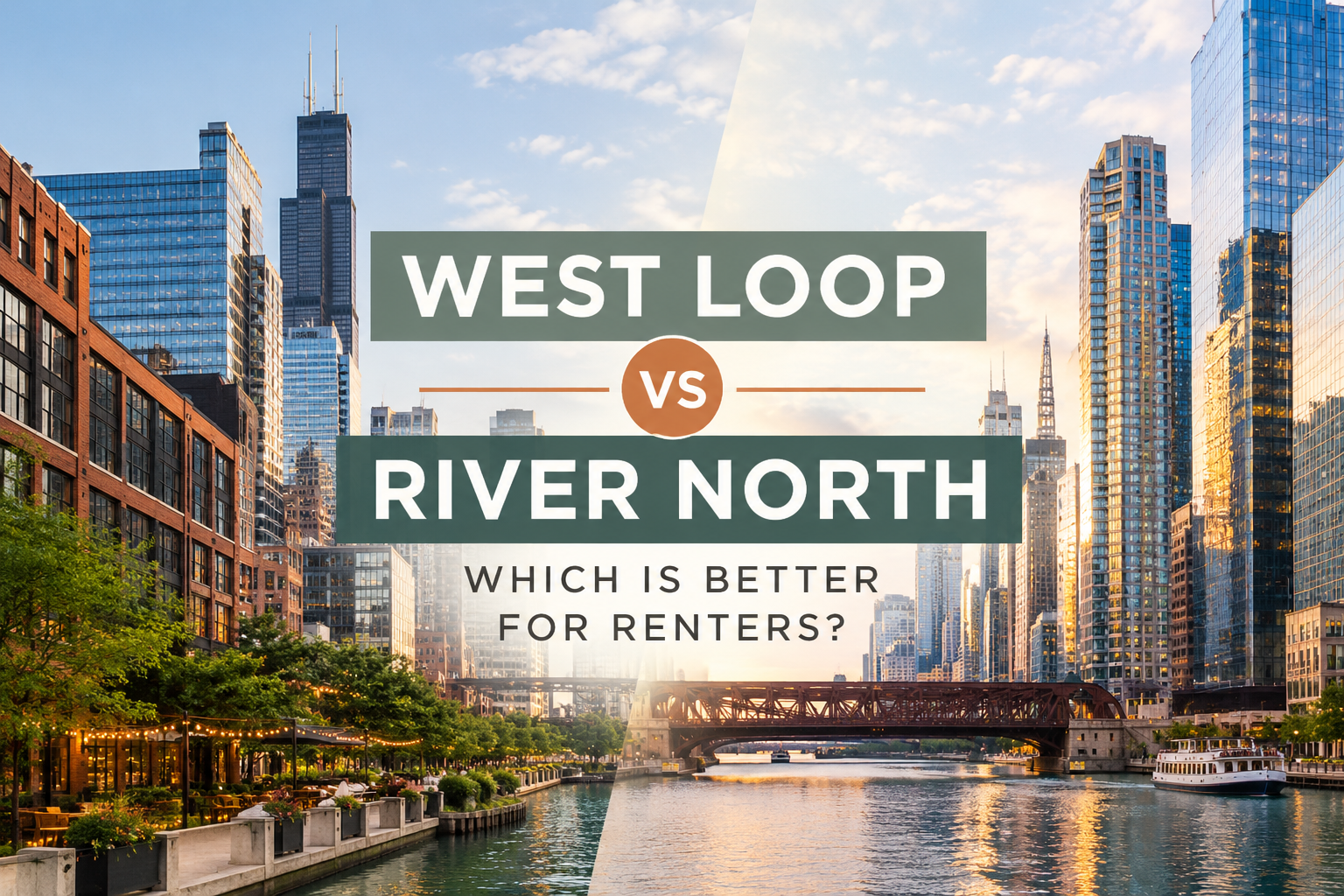
Choosing between two popular Chicago neighborhoods can be challenging, especially when both offer modern apartments, restaurants, entertainment, and convenient access to downtown. The West Loop vs River North comparison often comes down to more than rent or apartment amenities.
Your neighborhood influences your commute, daily routine, dining options, nightlife, transportation, and even how you experience the city.
West Loop and River North are both highly connected urban neighborhoods, but they have distinctly different personalities. Understanding those differences can make your apartment search more focused and productive.
West Loop vs River North: Neighborhood Overview
West Loop and River North are both close to downtown Chicago, yet their character has evolved in different ways.
West Loop has transformed from an industrial district into a vibrant residential and commercial neighborhood. Historic brick buildings and former warehouses now sit alongside modern apartment towers, restaurants, offices, cafés, and entertainment venues.
River North has a more established downtown atmosphere. It is known for high-rise residences, restaurants, nightlife, art galleries, shopping, and its proximity to major destinations throughout central Chicago.
In simple terms, West Loop often combines industrial heritage with contemporary urban living, while River North offers a more traditional downtown experience.
Both can work well for renters. The better fit depends on what you want from your surroundings.
Living in West Loop Chicago
Living in West Loop Chicago offers an energetic lifestyle centered around dining, work, entertainment, and modern residential development.
Fulton Market is one of the neighborhood's defining areas. Its concentration of restaurants, cafés, bars, businesses, and residential buildings creates an environment where many daily activities can happen within a relatively compact area.
The neighborhood also has a distinctive architectural character. Historic industrial structures contrast with sleek glass buildings, giving West Loop a visually eclectic identity.
For renters who enjoy trying new restaurants, walking to coffee shops, meeting friends nearby, or living close to downtown without being directly in the central business district, West Loop can be an appealing choice.
Its combination of convenience and neighborhood character has also made it a popular destination for people seeking contemporary urban living.
Living in River North Chicago
Living in River North Chicago provides a distinctly central city experience.
The neighborhood is surrounded by restaurants, bars, galleries, entertainment venues, shopping, hotels, offices, and other downtown destinations. Its location makes it particularly attractive to renters who want to remain close to the activity of central Chicago.
Many River North apartments are located in modern high-rise buildings. Depending on the property, renters may find features such as rooftop spaces, fitness centers, resident lounges, contemporary kitchens, package rooms, and expansive city views.
River North can feel polished, bustling, and metropolitan.
For renters who enjoy having a broad selection of restaurants, nightlife, shopping, and entertainment close to home, its central location can be a major consideration.
West Loop Apartments vs River North Apartments
The apartment buildings themselves are another important part of the West Loop vs River North comparison.
West Loop apartments can range from converted loft-style residences to newer high-rise communities. Some properties incorporate industrial-inspired elements that reflect the neighborhood's history, while newer buildings tend to emphasize contemporary design and amenities.
River North apartments are often associated with high-rise living, modern interiors, skyline views, and amenity-rich residential communities.
However, neighborhood reputation should never replace property-level research.
When comparing apartments for rent in West Loop with apartments for rent in River North, consider:
Monthly rent
Apartment size and floor plan
Building amenities
Parking availability
Pet policies
Fitness and recreation spaces
Natural light and views
Noise levels
Proximity to public transportation
Distance to work and everyday necessities
An impressive amenities package may look attractive online, but the surrounding location can have a much greater effect on your everyday experience.
West Loop vs River North Rent and Cost of Living
Rent is naturally one of the biggest considerations when choosing between these neighborhoods.
The West Loop vs River North rent comparison varies depending on the building, apartment size, amenities, views, location, and current market conditions. Both neighborhoods contain premium residential properties, so renters should evaluate individual listings rather than assume one neighborhood will always be less expensive.
The West Loop vs River North cost of living also extends beyond monthly rent.
Transportation, parking, dining, entertainment, groceries, and commuting expenses can all influence your overall budget.
For example, an apartment with slightly higher rent may still work well financially if its location allows you to walk to work or use public transportation instead of maintaining a car.
Likewise, a lower monthly rent may come with additional transportation costs if you have a lengthy commute.
Think about the total cost of your lifestyle, not simply the number printed on the rental listing.
West Loop vs River North Commute and Transportation
Transportation is one of the most practical factors in the West Loop vs River North commute comparison.
Both neighborhoods offer access to Chicago's public transportation network and provide relatively convenient connections to downtown.
However, your personal destination matters.
If you work in the Loop, either neighborhood may offer a manageable commute. If you frequently travel west or southwest, West Loop may provide a convenient starting point. If your routine involves Michigan Avenue, River North, or other central destinations, River North's location may be particularly practical.
Walking is another advantage of both neighborhoods.
Many residents can reach restaurants, cafés, offices, entertainment, and other destinations without relying entirely on a vehicle.
During apartment hunting, map your actual commute from the specific building you are considering. A neighborhood may look convenient on a city map, but the distance to your train station or preferred route can make a meaningful difference.
Dining, Nightlife, and Lifestyle
Food and entertainment are major parts of both neighborhoods.
West Loop is particularly recognized for its restaurant scene, especially around Fulton Market. The area offers restaurants, cafés, bars, and social venues that contribute to its energetic atmosphere.
River North also has an extensive selection of restaurants, lounges, bars, nightlife venues, galleries, and entertainment.
The distinction is more about atmosphere than availability.
West Loop often blends its dining and entertainment scene with a neighborhood-oriented residential environment. River North tends to feel more intensely connected to the downtown core.
For renters who want to step outside their apartment and immediately have plenty of places to explore, both neighborhoods offer substantial options.
West Loop or River North: Which Fits Your Lifestyle?
The answer to West Loop or River North depends on what matters most in your daily routine.
West Loop may appeal to renters who prioritize:
A contemporary neighborhood atmosphere
Fulton Market and its dining scene
Modern residential buildings
Walkable access to restaurants and cafés
Proximity to downtown
A blend of historic and contemporary architecture
River North may appeal to renters who prioritize:
A highly central downtown location
High-rise apartment living
Nightlife and entertainment
Restaurants and shopping
Proximity to major downtown destinations
An energetic metropolitan atmosphere
Neither neighborhood offers a universal solution for every renter. The right choice depends on your budget, commute, lifestyle, and preferred neighborhood character.
When evaluating the best Chicago neighborhoods for renters, personal priorities should always come first.
Final Thoughts
The West Loop vs River North decision ultimately comes down to how you want to experience Chicago.
West Loop combines industrial history, modern development, restaurants, offices, entertainment, and contemporary apartments. River North provides a highly central urban environment with high-rises, dining, nightlife, shopping, galleries, and easy access to downtown attractions.
Both neighborhoods offer compelling choices for renters.
Before signing a lease, look beyond the apartment itself. Consider your commute, transportation options, monthly budget, preferred amenities, dining habits, and the atmosphere you want outside your front door.
Because the right Chicago apartment is not simply the one with the best floor plan.
It is the one located in a neighborhood that works naturally with the way you live.