


Choosing an apartment is rarely just about square footage, finishes, or amenities. The address itself can influence your commute, social life, daily errands, and overall experience of living in the city.
Chicago offers an unusually diverse collection of neighborhoods. A modern high-rise near downtown can provide a very different lifestyle from a historic apartment on a quiet, tree-lined residential street.
That is why understanding what makes a good Chicago apartment location is essential before signing a lease.
The right location should make your everyday routine easier while giving you access to the places and experiences that matter most to you.
Why Location Matters When Choosing a Chicago Apartment
A beautiful apartment can lose some of its appeal if getting to work requires an exhausting commute or if basic errands require a car.
When choosing an apartment in Chicago, consider the neighborhood as an extension of the home itself. Your surrounding streets, transportation options, nearby businesses, parks, and community atmosphere all become part of your daily environment.
A well-positioned apartment can reduce travel time, make errands more convenient, and allow you to experience more of the city without constantly planning around transportation.
This is particularly important in Chicago, where neighborhoods have distinct identities and amenities.
The best location for an apartment in Chicago ultimately depends on your routine. A location that works perfectly for one renter may be impractical for another.
Access to Public Transportation
Public transportation is one of the most important characteristics of a convenient apartment location in Chicago.
The CTA provides extensive train and bus connections throughout the city, making proximity to reliable transit particularly valuable for renters who commute without a car.
When evaluating apartments near public transportation, consider more than the distance to the nearest station.
Look at the actual route you would take to work, school, or frequently visited destinations. A nearby station is useful, but a convenient direct route can be even more valuable.
Also consider bus stops, train frequency, transfer points, and the amount of walking involved.
For many Chicago renters, convenient transportation can make the difference between a stressful commute and a manageable one.
Walkability and Everyday Convenience
Walkability is another defining feature of a strong Chicago apartment location.
A walkable neighborhood allows residents to reach everyday destinations without depending on a vehicle. Grocery stores, coffee shops, restaurants, pharmacies, fitness centers, parks, and public transportation may all be within a comfortable walking distance.
For renters who enjoy spontaneous city living, Chicago walkable neighborhoods can provide a particularly appealing rhythm.
You can grab coffee before work, walk to dinner, meet friends nearby, or run a quick errand without turning every outing into a transportation project.
When visiting an apartment, walk several blocks beyond the building. Look at what surrounds it.
The apartment may be your private space, but the neighborhood is where much of your daily life unfolds.
Commute Time and Downtown Accessibility
Your commute should be one of the first considerations when evaluating where to live in Chicago.
For professionals working in the Loop or surrounding business districts, proximity to downtown can save significant time throughout the week. Even a modest reduction in daily travel can add up over the course of a year.
This is why apartments near downtown Chicago remain attractive to many renters.
However, downtown proximity is not automatically the right choice for everyone. Some renters may prefer a residential neighborhood with more green space, quieter streets, or a different community atmosphere.
The key is to calculate your actual Chicago apartment commute.
Consider how long it takes to reach work during typical commuting hours, which transportation options are available, and how often you expect to make the journey.
A neighborhood that looks close on a map may feel very different during rush hour.
Nearby Restaurants, Shopping, and Entertainment
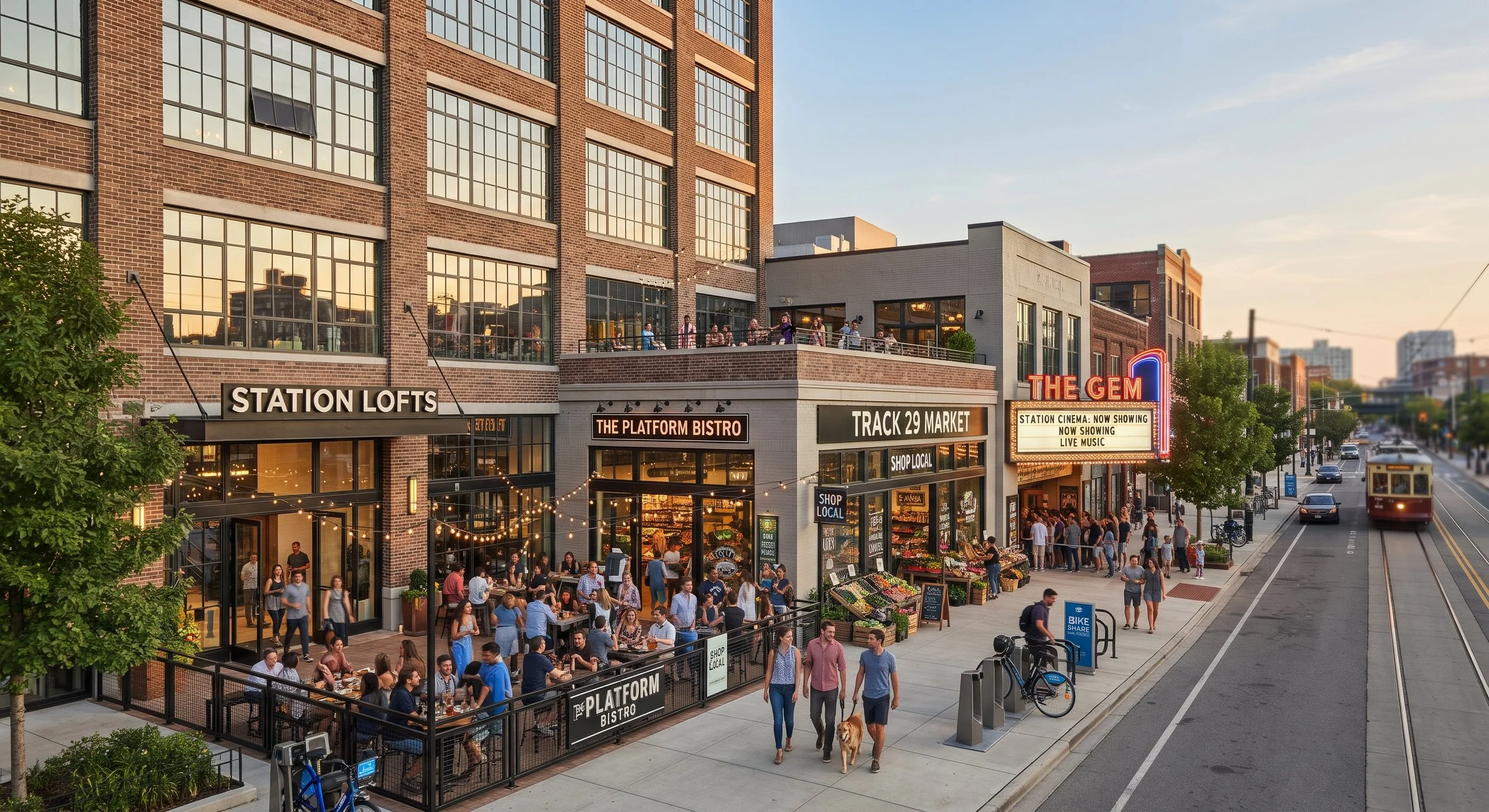
A great apartment location should support more than your weekday commute.
Restaurants, cafés, grocery stores, shopping, entertainment venues, and cultural attractions can significantly influence how enjoyable a neighborhood feels.
For renters who enjoy dining out, living near a diverse selection of restaurants can turn an ordinary evening into an opportunity to explore. Coffee shops can become informal workspaces. Local markets can simplify grocery shopping.
Entertainment matters, too.
Depending on the neighborhood, residents may have access to theaters, music venues, galleries, nightlife, boutiques, and other attractions.
When comparing Chicago apartment neighborhoods, make a list of the places and activities you use most often. Then see how easily you can access them from the apartment.
Convenience is not merely about distance. It is about how naturally the location fits into your routine.
Neighborhood Character and Lifestyle
Chicago's neighborhoods have their own visual language and social rhythm.
Some areas feature historic architecture, mature trees, and quieter residential streets. Others are characterized by modern towers, busy sidewalks, restaurants, nightlife, and a pronounced downtown atmosphere.
The best Chicago neighborhoods for apartments therefore depend heavily on personal lifestyle.
Someone who enjoys nightlife may prefer a neighborhood surrounded by restaurants and entertainment. A renter who values tranquility may prioritize parks, residential streets, and lower evening activity.
Young professionals may look for neighborhoods with easy access to downtown and social amenities. Remote workers may place greater importance on cafés, parks, larger living spaces, or a strong neighborhood atmosphere.
There is no universal formula.
The right neighborhood is the one whose pace and character complement the way you actually live.
Parks, Green Spaces, and Outdoor Access
Urban living does not have to mean giving up access to nature.
Parks, lakefront paths, recreational areas, and tree-lined streets can provide valuable breathing room within a dense city environment.
For renters who exercise outdoors, walk their dogs, cycle, or simply enjoy spending time outside, proximity to green space can become an important part of the apartment decision.
Chicago's lakefront is another significant consideration for certain renters. Neighborhoods with convenient access to the lakefront can offer opportunities for walking, running, cycling, and enjoying open views.
When evaluating a Chicago apartment location, think about how you want to spend your time outside the apartment.
A nearby park may seem like a minor amenity during a property tour, but it can become one of the most frequently used parts of your neighborhood.
Balancing Location, Rent, and Overall Value
Location inevitably affects apartment pricing.
Highly connected areas near downtown, major transportation routes, popular restaurants, and entertainment districts can command significant rental demand.
However, the cheapest apartment is not necessarily the most economical option.
Suppose one apartment costs slightly more but allows you to walk to work and eliminate a daily commute. Another may have lower rent but require frequent rideshares, public transportation, or parking expenses.
The second apartment may not actually be cheaper once transportation and time are considered.
When comparing Chicago apartments, look at the broader value proposition.
Consider:
Monthly rent
Transportation costs
Parking expenses
Commute time
Nearby amenities
Apartment size
Building amenities
Neighborhood convenience
Access to parks and recreation
The strongest value is often found where price and convenience strike a sensible equilibrium.
How to Evaluate an Apartment Location Before Renting
Before committing to an apartment, investigate the location as carefully as you investigate the unit.
Start by mapping your regular destinations. Check the commute to work, school, family, or other places you visit frequently.
Then examine nearby transportation. Identify train stations, bus routes, and alternative ways to get around.
Next, explore the surrounding streets.
Look for grocery stores, restaurants, pharmacies, cafés, gyms, parks, and other everyday necessities. Visit at different times of day when possible. A neighborhood can feel very different on a weekday morning compared with a weekend evening.
It is also worth checking the practical details that are easy to overlook: traffic noise, construction activity, parking availability, building entrances, and pedestrian activity.
A map can tell you where an apartment is.
Exploration tells you what living there might feel like.
Final Thoughts: Finding the Right Apartment Location in Chicago
A great Chicago apartment location is more than a desirable address. It is a place that supports the way you live.
Convenient public transportation can simplify commuting. Walkability can make everyday errands easier. Nearby restaurants and entertainment can enrich your free time, while parks and green spaces can provide a welcome counterpoint to urban density.
When deciding where to live in Chicago, consider the entire environment surrounding the apartment rather than focusing solely on the unit's interior.
The right combination of accessibility, neighborhood character, amenities, transportation, and affordability can transform an apartment from simply a place to sleep into a genuine home base.
In a city as varied as Chicago, location is not just part of the apartment search.
It is one of the most important decisions in it.